A successful upload is not the same as an accurate financial history. A file can be accepted while containing duplicated periods, inconsistent currencies or opening balances that already include the transactions being imported.
Prepare a small, explainable sample before attempting a large migration.
Keep an untouched source copy
Preserve the original statements or exports in a secure location. Work on a separate preparation copy so you can return to the evidence if a transformation introduces an error.
Record which account, currency and date range each file covers. A folder full of similarly named exports is difficult to reconcile once periods begin to overlap.
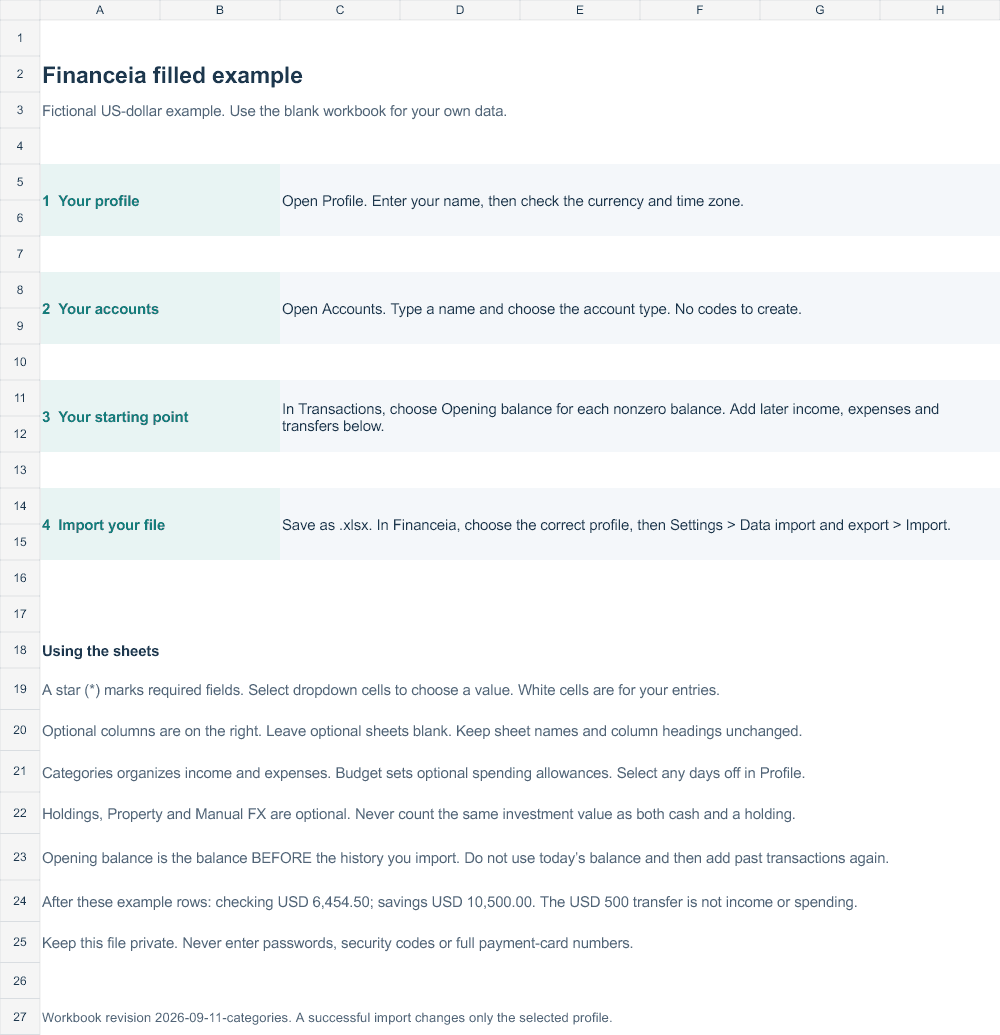
Use the current import template and instructions for the actual product. Financeia's public journal provides import resources, but the supported format and required fields should be checked in the current version rather than assumed. Financeia
Set the opening boundary first
If the opening balance is measured at June 30, the imported activity should normally begin after that cutoff under the chosen setup method. Including June transactions already reflected in the opening balance can count them twice.
Define whether pending items are included and how card liabilities, loans and transfers are represented. These are structural decisions, not problems to postpone until after the file is loaded.
A clean start date makes later reconciliation much easier.
Normalize without destroying meaning
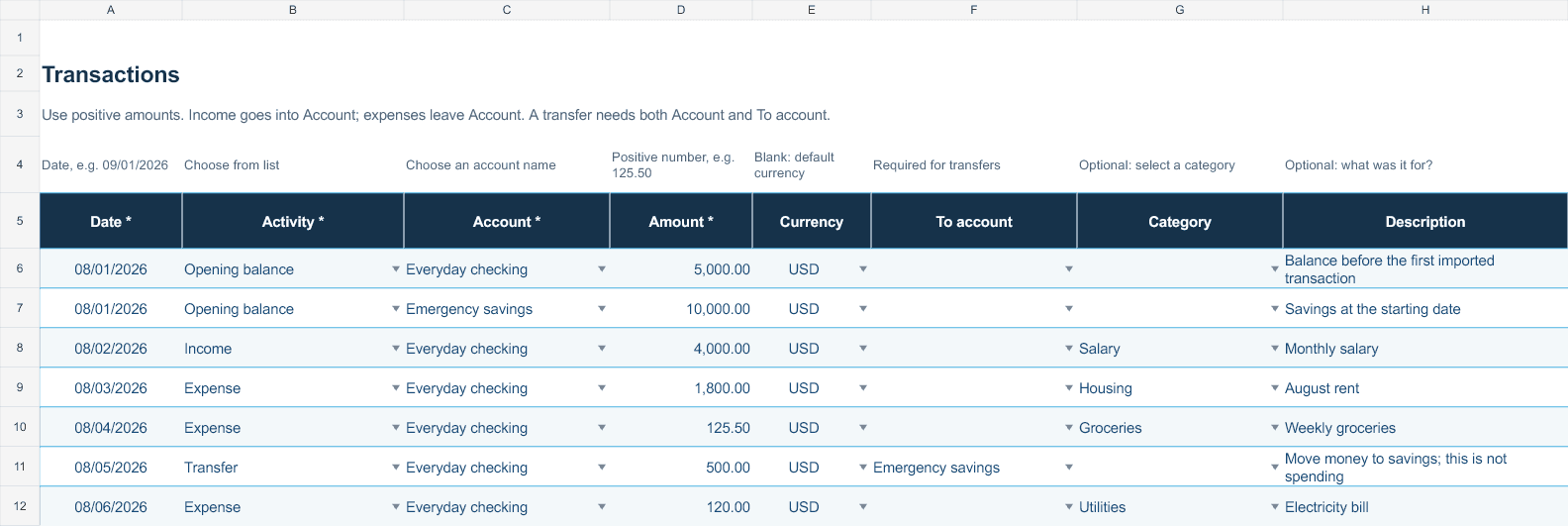
Check dates, decimal marks, signs, account names and currency codes. Preserve original descriptions and references where the supported format allows them.
Do not convert every transaction into the reporting currency before import unless the current documented workflow specifically requires that treatment and preserves the source facts. Original amounts are essential for reconciliation.
Separate income, consumption, transfers and owner movements based on evidence. A bank debit is not automatically an expense.
Test one short period
Choose a sample containing ordinary purchases, a transfer, a refund and any other important event types. Calculate the expected closing balance independently.
After import, compare record counts, amounts, account balances and classifications. Verify how the product handles rejected rows, edits and reimports. Do not assume automatic duplicate prevention or rollback exists.
Only expand once the sample can be explained from beginning to end. If a correction is needed, document it before loading more history.
Reconcile the completed migration
A finished migration should have a source-file inventory, a clear date boundary, an exception list and account-level checks. Record any missing periods or estimates honestly.
The objective is not to import the largest possible volume. It is to create a history that supports reliable decisions without requiring you to reconstruct the migration every time a balance looks wrong.